 teaclass
Pu-erh
Pu'erh (also Pu'er) is one of the most unusual teas you'll find. This tea is different in processing, storage, and taste from any other tea on earth. Because of its rarity and unique characteristics, pu'erhs have a connoisseur following like few other teas. In this lesson we'll attempt to demystify this most unusual tea.
Pu'erh is only produced in the Yunnan province of southern China and is one of the oldest forms of tea. It is typically made with the larger-leafed assamica variety of Camellia sinensis. It is also the only tea that is actually fermented and not just oxidized. The terms 'fermentation' and 'oxidation' have been used interchangeably in the tea trade (in part because the Chinese historically only used one word to refer to both processes). In reality, oxidation is a purely chemical reaction, whereas fermentation involves microbes. Fermentation occurs in the creation of wine, cheese, yogurt, leavened bread, compost, and pu'erh, but not in any other tea. Pu'erh falls into one of two general categories:
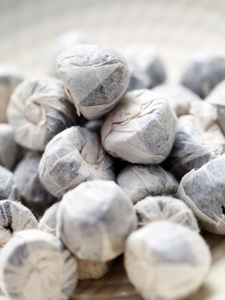
Raw (Sheng) Pu'erh is processed similar to green tea and is sometimes pressed into various shapes (often a "toucha" or "bird's nest"). Once processing is completed - which is basically a combination of withering, rolling, re-wetting the leaves, pan-firing; a rough "green" tea - this tea is carefully stored and aged for future consumption. The process takes several years; very "young" sheng pu'erhs can be quite astringent. The aging refines the tea and brings out flavors unlike any other variety. Essentially, pu'erh is a "living tea," much like wine. Carefully aged pu'erhs are some of the most expensive teas on earth.
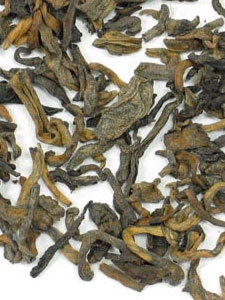
Ripened (Shou) Pu'erh undergoes a faster, deeper aging process that consists of piling it together and adding moisture to encourage oxidation and fermentation. This only takes about 3 months and is therefore significantly less expensive than raw pu'erh. Once finished, the dark or ripened pu'erh will taste similar to a green pu'erh that has been aged for 15 to 20 years, but not exactly the same. The color is deeper and the body more thick and full. Well-cared for green pu'erh that is quite old will have a flavor with many, many layers and soothing, fresh earthy aroma.
Regarding storage: ideal storage for pu'erh is a temperate, controlled environment. It should not be too dry, or the tea will dry out and the aging will stop (the microbes will die). It should also not be too humid and hot. A wine cellar for large collections or a cigar humidor for smaller collections will work well. Also, while sheng pu'erh has the ability to improve with age, shou pu'erh (the ripe variety) will not age further. Essentially, all of the aging that will happen occurred in those first several months when the leaves were piled together. However, shou pu'erh will store and keep well for years; the flavor just won't evolve further.
The polyphenols that are prized components of other teas are largely absent in pu'erhs (polyphenols, in addition to health benefits, are what give tea its mouthfeel and astringency). That said, pu'erhs have been consumed for centuries for medicinal reasons. They are processed using healthy microbes and microflora. While this may seem disconcerting at first, it is these same healthy bacteria that are found in yogurt and that are required in our digestive systems to ensure proper function.
The flavor of pu'erh is just as unique as its processing. What pu'erh may lack in astringency (from the polyphenols), it makes up for in body and depth. It has an earthy, woodsy aroma, like a damp forest after the rain, with flavors reminiscent of mushrooms, earthy herbs, leather, hay. It's not unusual at all to pick up notes of tobacco, musty antique store, barnyard - all things which may not sound very "tea like" (if anything, certain distilled liquors are described like that!), but when you experience the very smooth and refreshing softness of pu'erh, it makes sense to your palate.
Pu'erh is also a very forgiving cup to infuse; you can steep it for 30 seconds or 30 minutes - really, whatever your preference! It won't get bitter or too strong. The flavor just becomes "lighter" or "heavier", but the depth and quality will be consistent. For this reason, fine pu'erhs are also excellent for multiple infusions.