 teaclass
Types of Tea
All tea comes from the leaves of the Camellia sinensis plant. The styles of tea are produced by altering the shape and chemistry of the leaf, unromantically called 'processing' or 'manufacture.' This lesson will look at simple tea production.
Tea processing is five basic steps; some teas don't utilize all of these steps, while other teas repeat them several times. Basic processing is Plucking, Withering (allowing the leaves to wilt and soften), Rolling (to shape the leaves and wring out the juices), Oxidizing (see below), and Firing (ie: Drying).
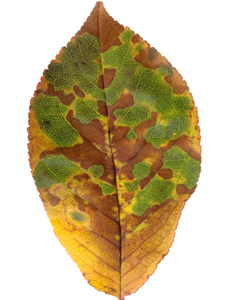
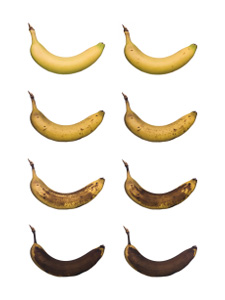
The most crucial part, what defines the categories of tea, is Oxidizing. Oxidation occurs when the enzymes in the tea leaf interact with oxygen, after the cell walls are broken apart. This can happen quickly, through rolling, cutting, or crushing, or more slowly through the natural decomposition of the leaf. Actually, you see the same process in a piece of fruit. Left to sit, an apple will slowly turn brown. Cut or bruise the apple, and it will brown much more quickly. Now, interestingly, if you bake the apple, it will not brown. The lovely, golden-white apple slices inside a pie will look just as fresh as when you first put them in the oven. This is because heat (at or above 130 degrees) stops enzymatic activity and oxidation. Keep that concept in mind for a bit, because we're going to come back to it.
NOTE: "Oxidation" is still referred to by some in the tea industry as "fermentation." This stems from an earlier belief that what was happening to the tea leaves was similar to fermentation of grapes into wine. Everyone now knows this is actually oxidation, but because of its long history, the term "fermentation" is still used. This is actually quite common to hear from expert tea professionals in India, for example.
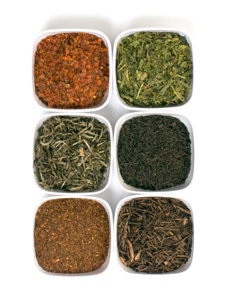
The five basic styles of tea are White, Green, Oolong, Black and Pu'erh.
White Tea is essentially unprocessed tea. The name is derived from the fuzzy white "down" that appears on the unopened or recently opened buds - the newest growth on the tea bush. White tea is simply plucked and allowed to wither dry. That's it, really. If the weather isn't cooperating, the leaves may be put into a gentle tumble dryer on very, very low heat to assist (tea waits for no one, not even spring showers), but the leaves are not rolled, shaped, etc. Some minimal oxidation does happen naturally, as it can take a full day or two to air dry the tea leaves. This is why some white teas, like the classic White Peony, show leaves of differing colors (white, green, and brown). White teas produce very pale green or yellow liquor and are the most delicate in flavor and aroma.
Green Tea is plucked, withered and rolled. It is not oxidized because during the rolling process, oxidation is prevented by applying heat. Remember our baked apples? For green tea, the fresh leaves are either steamed or pan-fired (tossed in a hot, dry wok) to a temperature hot enough to stop the enzymes from browning the leaf. Just like blanching vegetables, really. Simultaneously, the leaves are shaped by curling with the fingers, pressing into the sides of the wok. The leaves are then rolled and swirled-countless shapes have been created, each with a different taste. The leaves are then given their final firing to fully dry them, after which they are done. The liquor of a green tea is typically a green or yellow color, and flavors range from toasty, grassy (pan fired teas) to fresh steamed greens (steamed teas) with mild, vegetable-like astringency.
Oolong Tea is one of the most time-consuming teas to create. It utilizes all of the five basic steps, with rolling and oxidizing done repeatedly. Oolong is a complex category because it's so broad: it's most simply described as half-way between green and black, and that's quite accurate. These teas are anywhere from 8% oxidized to 80% (measured roughly by looking at the amount of brown or red on the leaf while the tea is being made). The leaves are rolled, then allowed to rest and oxidize for a while. Then they'll be rolled again, then oxidized, over and over. Often, gentle heat is applied to slow the enzymes down a bit. Over the course of many hours (sometimes days), what is created is a beautiful layering or "painting" of aroma and flavor. Oolongs typically have much more complex flavor than Green or White teas, with very smooth, soft astringency and rich in floral or fruity flavors. Because of their smooth yet rich flavor profiles, Oolongs are ideal for those new to tea drinking.
Black Tea also utilizes all five basic steps, but is allowed to oxidize more completely. Also, the steps are followed in a very linear form; they are generally not repeated on a single batch. The tea is completely made within a day. The brewed liquor of a Black tea ranges between dark brown and deep red. Black teas offer the strongest flavors and, in some cases, the greatest astringency. Black teas are the only style of tea regularly consumed with milk and sugar (though some dark Oolong drinkers may disagree) and are the most popular bases for iced tea.
Pu'erh Tea (pu-ARR or pu-ERR) is a completely different art. It first undergoes a process similar to Green tea, but before the leaf is dried, it's aged either as loose-leaf tea or pressed into dense cakes and decorative shapes. Pu'erh is a fermented tea (and the use of 'fermentation' is correct here, although not the type which produces alcohol). Depending on the type of pu'erh being made (either dark "ripe" pu'erh or green "raw" pu'erh), the aging process lasts anywhere from a few months to several years. Very old, well-stored pu'erhs are considered "living teas", just like wine. They are prized for their earthy, woodsy or musty aroma and rich, smooth taste.
In future lessons we'll delve deeper into each style of tea.